






UNLOCK A WORLD OF POSSIBILITIES
The National Registration Bureau (NRB) is a Government Department operating under the Ministry of Homeland Security. Established by the National Registration Act of 2010, the NRB is mandated to implement, coordinate, manage, and maintain Malawi’s National Registration and Identification System (NRIS).
As the custodian of legal identity in Malawi, the NRB plays a pivotal role in enabling citizens’ access to services, promoting national security, and supporting effective governance through the issuance and management of vital identity credentials. The Bureau is responsible for the registration and issuance of: Birth Certificates, Death Certificates, National Identity Cards for bona fide Malawian citizens, Foreign Identity Cards for eligible non-citizens residing in Malawi and Certificates of Marriage Registration
Through its work, the NRB ensures that every individual’s identity is legally recognized and securely documented laying the foundation for inclusive development and citizen empowerment.
NATIONAL ID
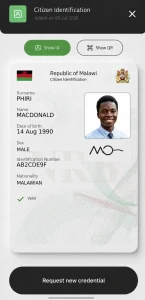
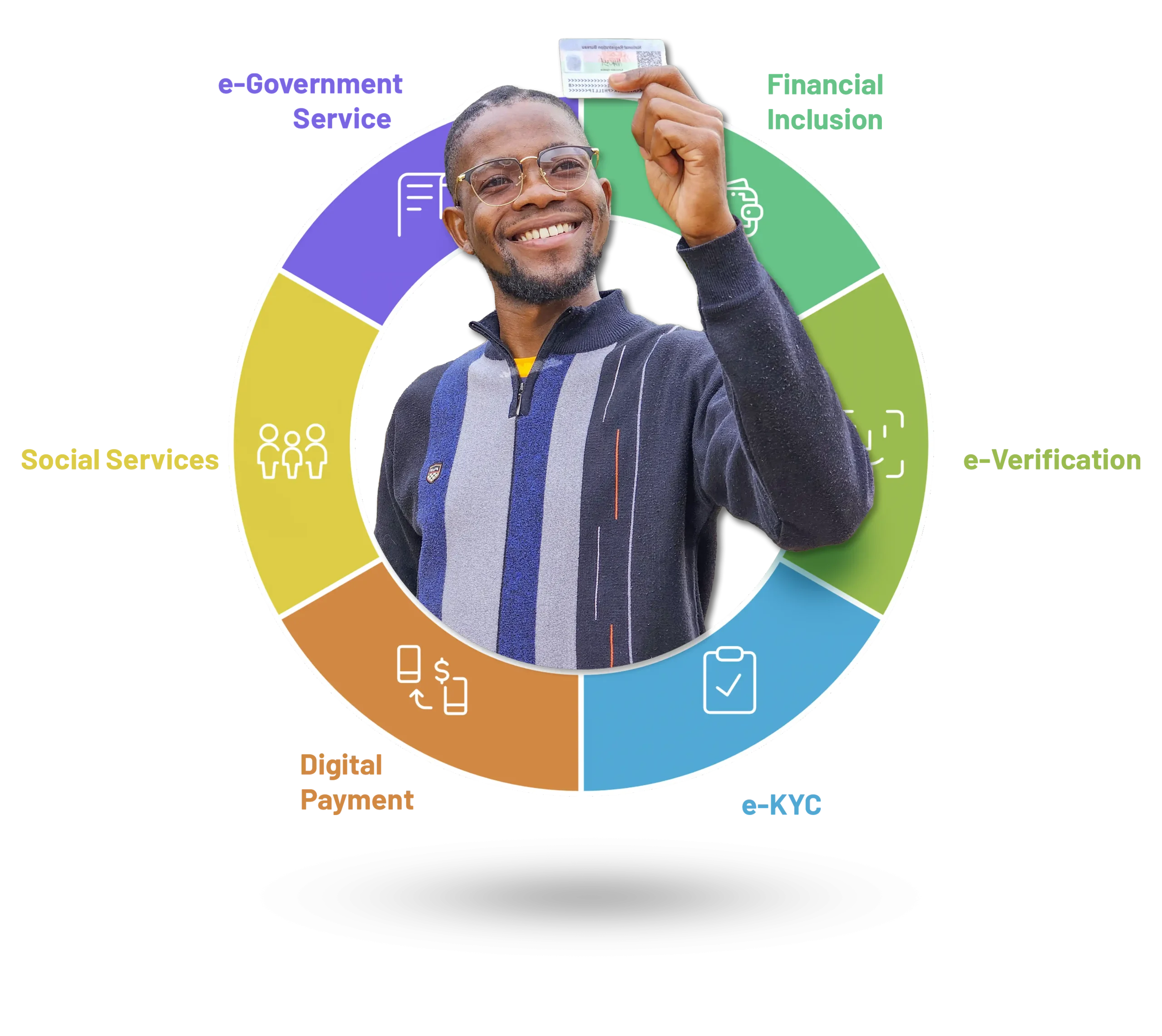
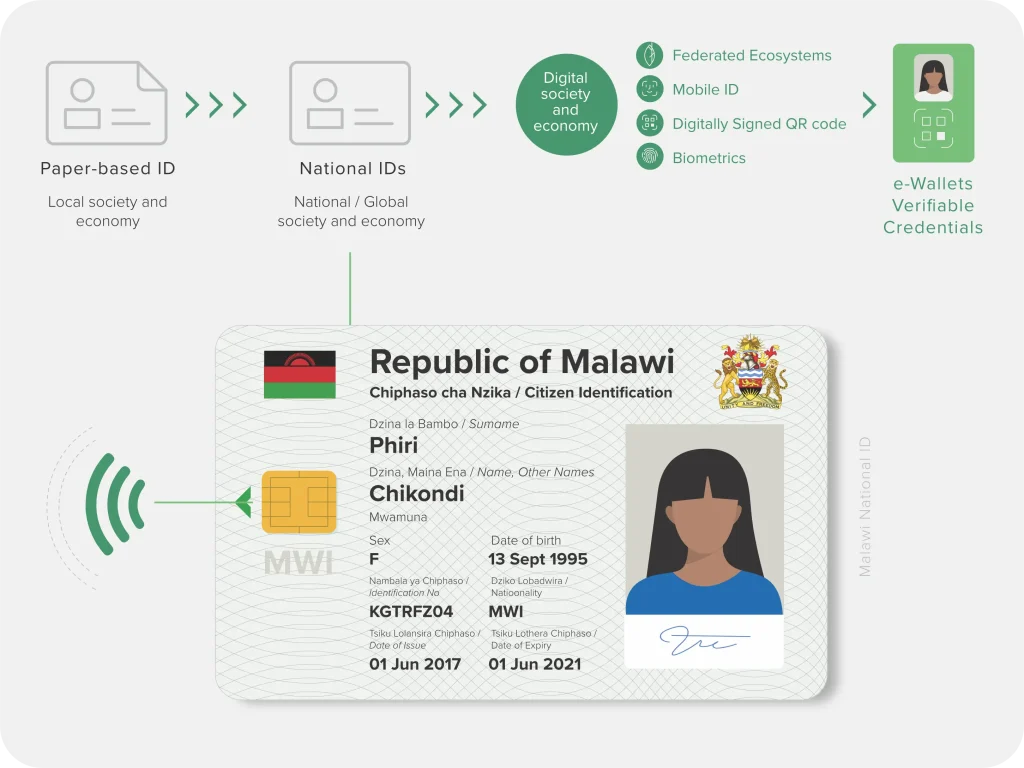
The Malawi National ID (NID) is a digital ID based on ICAO standards that includes the biometric and biographic data of the individuals. The NID has a unique identification number, QR Code and Machine-Readable Zone. The NID is used as legal identity and proof of citizenship. Use cases of NID are:
- Financial Inclusion
- e-Verification
- e-KYC
- Digital Payment
- Social Services
- e-Government Service

JOIN THE REGISTRATION
National ID Linkages with public and private sectors

Approximately 3000 ghost workers were removed from payroll. Enables accurate verification of civil servants' identities, helping to eliminate ghost workers from the government payroll. It ensures transparency in recruitment, deployment, and promotions by linking personnel records to a unique and verifiable ID. This integration strengthens public sector accountability, improves payroll efficiency, and supports evidence-based human resource planning.

AIP using National ID database for identifying beneficiaries. Biometric verification for 1.5 million beneficiaries, reducing fraud and enhancing efficiency

Strengthens border security and enables accurate identification of individuals entering or exiting the country. It streamlines passport issuance, visa processing, and residency permits by enabling real-time identity verification. This integration enhances national security, reduces identity fraud, and improves service delivery in migration management.

Enhances identity verification and strengthens compliance with Know Your Customer (KYC) and anti-money laundering (AML) regulations. It enables accurate tracking of financial transactions, detection of suspicious activities, and reduction of identity-related fraud. This integration supports financial integrity, improves oversight, and aligns Malawi with global financial governance standards.

Utilisation of Post Offices as Service Centres, use of courier business

Improves taxpayer identification, broadens the tax base, and enhances compliance monitoring. It enables accurate matching of individuals to financial activities, reducing tax evasion and fraud. This integration supports efficient revenue collection, promotes transparency, and strengthens domestic resource mobilization.

Linking the National ID with the National Initiative for Civic Education (NICE) enables targeted civic awareness campaigns by identifying and reaching specific population groups more effectively. It supports inclusive citizen engagement, especially among marginalized communities, by ensuring everyone is counted and informed. This integration promotes democratic participation, accountability, and informed decision-making at all levels.

Enhanced and more transparent voter roll. 7.2 million Malawians were verified for voter regsitration for the 2025 election. Inclusion in VR through Digitally Signed QR Code (2 million voters)

Through integration with Airtel, NRB enhances trust, compliance, and security in SIM registration and mobile money services.

Integrating National ID with Know Your Customer (KYC) processes allows for instant and reliable identity verification, reducing the risk of impersonation and fraud. It simplifies customer onboarding for banks and financial institutions while ensuring compliance with regulatory standards. This leads to greater financial inclusion, operational efficiency, and strengthened trust in the financial ecosystem.

Integrating National ID with Know Your Customer (KYC) processes allows for instant and reliable identity verification, reducing the risk of impersonation and fraud. It simplifies customer onboarding for banks and financial institutions while ensuring compliance with regulatory standards. This leads to greater financial inclusion, operational efficiency, and strengthened trust in the financial ecosystem.

Integrating National ID with Know Your Customer (KYC) processes allows for instant and reliable identity verification, reducing the risk of impersonation and fraud. It simplifies customer onboarding for banks and financial institutions while ensuring compliance with regulatory standards. This leads to greater financial inclusion, operational efficiency, and strengthened trust in the financial ecosystem.

Integrating National ID with Know Your Customer (KYC) processes allows for instant and reliable identity verification, reducing the risk of impersonation and fraud. It simplifies customer onboarding for banks and financial institutions while ensuring compliance with regulatory standards. This leads to greater financial inclusion, operational efficiency, and strengthened trust in the financial ecosystem.

Integrating National ID with Know Your Customer (KYC) processes allows for instant and reliable identity verification, reducing the risk of impersonation and fraud. It simplifies customer onboarding for banks and financial institutions while ensuring compliance with regulatory standards. This leads to greater financial inclusion, operational efficiency, and strengthened trust in the financial ecosystem.

Integrating National ID with Know Your Customer (KYC) processes allows for instant and reliable identity verification, reducing the risk of impersonation and fraud. It simplifies customer onboarding for banks and financial institutions while ensuring compliance with regulatory standards. This leads to greater financial inclusion, operational efficiency, and strengthened trust in the financial ecosystem.

Integrating National ID with Know Your Customer (KYC) processes allows for instant and reliable identity verification, reducing the risk of impersonation and fraud. It simplifies customer onboarding for banks and financial institutions while ensuring compliance with regulatory standards. This leads to greater financial inclusion, operational efficiency, and strengthened trust in the financial ecosystem.
NEWS & EVENTS
NRB Innovation Set to Transform Banking Through Digital Identity Verification
NRB Completes Phase One of National Birth Registration Campaign
Minister Impressed with Phase One of National Birth Registration Campaign
Social Media Feeds
NRB TRAINS STAFF ON MARRIAGE REGISTRATION SOFTWARE The National registration Bureau is taking further steps in strengthening its marriage registration mandate by training its district registration staff on the marriage registration procedures and software. The bureau is conducting marriage registration trainings of some its staff from Blantyre, Lilongwe and Mzimba districts at Linde Hotel in Mponela, Dowa. The trainings will be conducted as the software is being rolled out, and currently the above districts have been prioritized, being high volume districts. The main primary purpose of the training was to equip NRB workers with relevant knowledge on how the registration forms must be filled, how the details must be entered in the system, and provide them with hands on experience on how to use the registration software. The Director of administration for NRB, Madam Gloria Bamusi, remarked that the training is very important in the functions of the Bureau, as it will help them to implement marriage registration, that is helpful in to families and the nation. She encouraged the NRB officers to actively engage and utilize the knowledge they have attained in their day-to-day work. Speaking during the training, the Chief Registration officer, Mr Rhodrick Langwe emphasized on the need for officers to be diligent ensure that the information and all details provided on the registration forms are correctly entered in the system. “You must be very careful with every variable that you enter in the marriage registration, and all civil registration software, as it will become vital statistics for the country”. Mr Langwe also emphasized the importance of marriage registration “The marriage registration is very crucial out there, you might feel like you are doing nothing but when the certificate goes out there, it may help in managing deceased estate and end child marriages. Due to that, the work must be done with commitment to ensure that all parties involved in the registration process enter the correct details”. He said. One of the trainees who is an Assistant Registration Officer for Blantyre District Registration Office Wezzie Mpinganjira said that with the knowledge gained from the training, she will be able to do her work with ease as she knows exactly what is expected of her during this exercise. “This training is very useful and has equipped me with relevant knowledge and skills with which I will be able to deal with clients without any hardships.” Mpinganjira said. NRB will be registering three types of marriages namely civil, customary, and religious marriages.
NRB MOGWILIZANA NDI ACB AWONJEZERA NDONDOMEKO ZOLIMBANA NDI KATANGALE Bungwe la National registration Bureau NRB lakonza ndondomeko zowonjezera polimbana ndi katangale. Bungweli lakonza ndondomekozi ku nkumano womwe linachita ku Mponera Mboma la Dowa, pamodzi ndi a bungwe la Anti Corruption Bureau ACB. Poyankhula ku msonkhanowu mkulu wa bungwe la NRB a Patrick Machika anathokoza bungwe la ACB pothandizila kuti NRB lichepetse chiwophyezo cha katangale pogwila ntchito yake.Iwo anatsimikizila kuti Bungweli lichita zonse zotheka kulimbana ndi katangale, ndi kuthana ndi omwe akuchita ntchitidwewu. Nkulu wa za chilungamo mu unduna wa za chitetezo mayi Mary Phombeya anayamikila bungwe la NRB pokonza nkumanowu kuti uthandize kuwunika ntchito za bungweli ndi kuthana ndi katangale.
NRB STRENGTHENS ITS EFFORTS TO FIGHT AGAINST CORRUPTION In its efforts to curb corruption, the National Registration Bureau (NRB) together with the Anti-Corruption Bureau held a three-day risk register review meeting at Linde hotel in Dowa district starting from 24th to 26th August, 2026. The NRB institutional integrity committee main called for this meeting to evaluate the possible causes of corruption within the operations of NRB, the existing internal controls and their effectiveness in fighting against corruption. Speaking during the meeting, the Senior Corruption Prevention Officer for ACB Mr. Jimmy Mtafya, commended NRB for its efforts in fighting against corruption. He said that NRB’s dedication to end corruption is crucial to the development of Malawi as its services affect people’s ability to access public services and help in providing social protection. “The services offered by NRB have a great impact on people’s identity, access to public services, providing social protection as well as ensuring social inclusivity of all people. As such, there is a need to ensure that the institution is corruption free; Mtafya said.” The Deputy Director of ethics in the Department of Homeland security in her remarks emphasised the importance of the meeting, stating that the review of the risk register is not just a routine exercise, but critical for the bureau’s fight against corruption. In his words, the Principal Secretary for NRB Mr. Patrick Machika stated that the Management will act on all reported cases of staff misconduct and enforce disciplinary measures where warranted. He also commended NRB staff for their hard work and dedication to duty particularly in the ongoing birth registration exercise. The meeting was attended by selected staff members from the headquarters and districts. Lack of integrity, personal interest, and poor service delivery are some of the causes of corruption that were highlighted during the meeting. With the assistance of ACB officials, the Bureau devised a corruption risk register and treatment plan that will guide its fight against corrupt practices.